







City Desk
- Details
- Category: City Desk

- Details
- Category: City Desk
Clement Clarke Moore 1779 – 1863
'Twas the night before Christmas, when all through the house
Not a creature was stirring, not even a mouse;
The stockings were hung by the chimney with care,
In hopes that St. Nicholas soon would be there;
The children were nestled all snug in their beds,
While visions of sugar-plums danced in their heads;
And mamma in her ’kerchief, and I in my cap,
Had just settled our brains for a long winter’s nap,
When out on the lawn there arose such a clatter,
I sprang from the bed to see what was the matter.
Away to the window I flew like a flash,
Tore open the shutters and threw up the sash.
The moon on the breast of the new-fallen snow
Gave the lustre of mid-day to objects below,
When, what to my wondering eyes should appear,
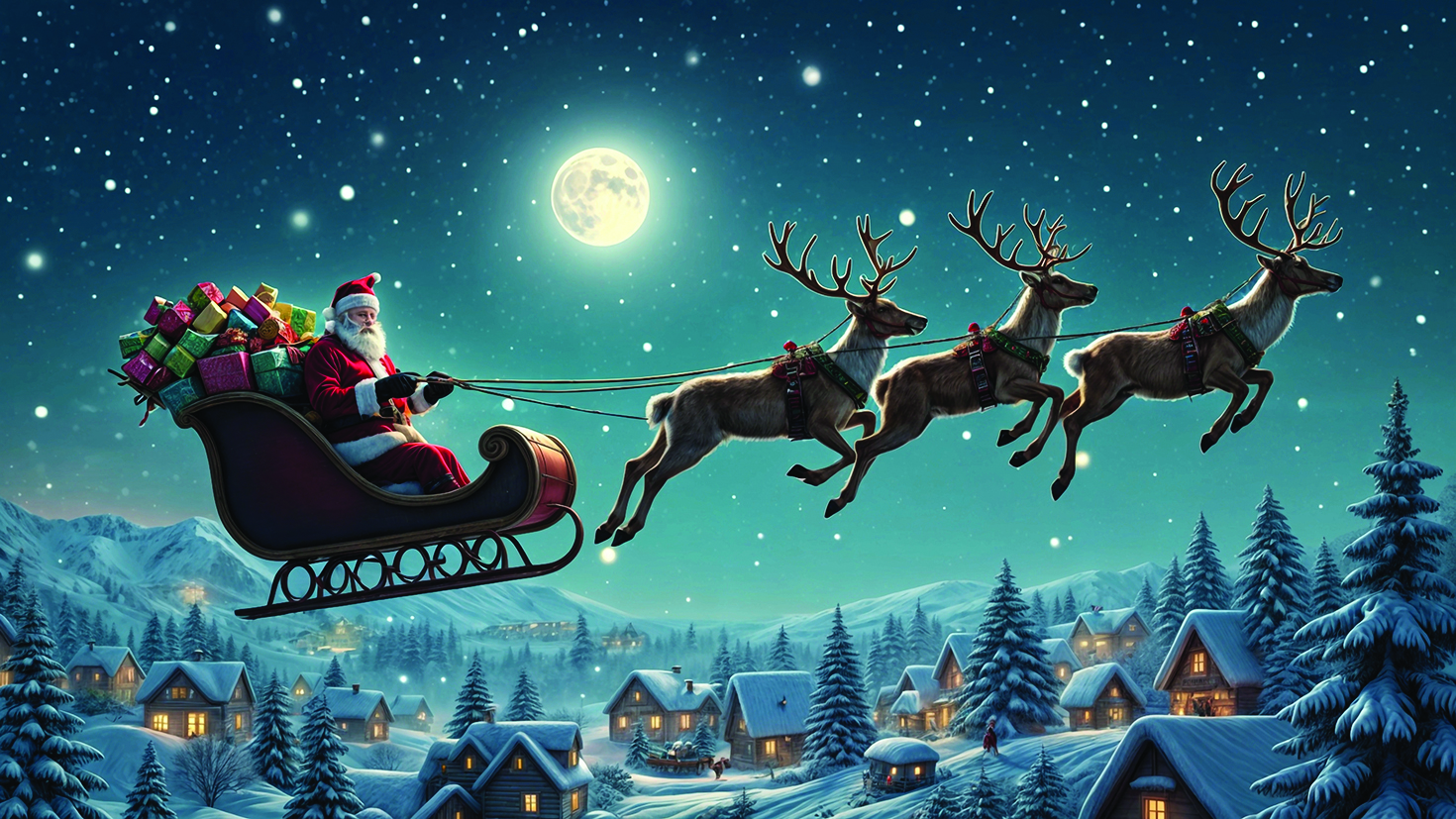
But a miniature sleigh, and eight tiny reindeer,
With a little old driver, so lively and quick,
I knew in a moment it must be St. Nick.
More rapid than eagles his coursers they came,
And he whistled, and shouted, and called them by name;
"Now, Dasher! now, Dancer! now, Prancer and Vixen!
On, Comet! on, Cupid! on, Donder and Blitzen!
To the top of the porch! to the top of the wall!
Now dash away! dash away! dash away all!"
As dry leaves that before the wild hurricane fly,
When they meet with an obstacle, mount to the sky;
So up to the house-top the coursers they flew,
With the sleigh full of Toys, and St. Nicholas too.
And then, in a twinkling, I heard on the roof
The prancing and pawing of each little hoof.
As I drew in my head, and was turning around,
Down the chimney St. Nicholas came with a bound.
He was dressed all in fur, from his head to his foot,
And his clothes were all tarnished with ashes and soot;
A bundle of Toys he had flung on his back,
And he looked like a pedler just opening his pack.
His eyes—how they twinkled! his dimples how merry!
His cheeks were like roses, his nose like a cherry!
His droll little mouth was drawn up like a bow
And the beard of his chin was as white as the snow;
The stump of a pipe he held tight in his teeth,
And the smoke it encircled his head like a wreath;
He had a broad face and a little round belly,
That shook when he laughed, like a bowlful of jelly.
He was chubby and plump, a right jolly old elf,
And I laughed when I saw him, in spite of myself;
A wink of his eye and a twist of his head,
Soon gave me to know I had nothing to dread;
He spoke not a word, but went straight to his work,
And filled all the stockings; then turned with a jerk,
And laying his finger aside of his nose,
And giving a nod, up the chimney he rose;
He sprang to his sleigh, to his team gave a whistle,
And away they all flew like the down of a thistle,
But I heard him exclaim, ere he drove out of sight,
"Happy Christmas to all, and to all a good-night."
- Details
- Category: City Desk
- Fri, December 12th, 7:30PM: Jordan Lane
- Live music performance ($15-$25 Tickets) https://theticketing.co/e/
jordanlane-dec12th - Jordan Lane brings a night of music, storytelling, and shared humanity to Butte, offering a raw and soulful blend of Americana, Folk, and Soul shaped by his own lived experiences. Supported by Park Street Printers, his Backroads & Ballads Tour continues the momentum of his 56 Counties Challenge, an ambitious mission to perform in every county in Montana within a year. Jordan’s shows mix heartfelt lyrics with hilarious and moving stories gathered from Montana’s highways and small towns, creating an experience that feels both nostalgic and boldly alive. Audiences can expect an evening filled with warmth, laughter, reflection, and genuine connection as Jordan invites everyone into a space where community truly matters.
- Sat, December 13th, 8PM: Mojo Risin' A Tribute to the Doors
- Live music performance ($10-$15 Tickets) https://theticketing.co/e/
mojorisin-december13th - Mojo Risin’, the premier Doors tribute band from Los Angeles, brings their high-energy and authentically psychedelic sound to The Covellite for a night that channels the golden era of rock. Known for performances that ignite audiences with classics like Light My Fire, Break on Through, and Riders on the Storm, the band captures the spirit and intensity that defined The Doors. Frontman John Nagle mirrors Jim Morrison’s unmistakable voice and charisma, while guitarist Matt O’Neill, drummer Eric Nagle, and their rotating keyboardists deliver a faithful and dynamic recreation of the iconic lineup. The evening also features support from Friends of the Family, a Butte favorite known for heavy rock, blues, and boogie with true local attitude. Together, they promise an unforgettable celebration of one of rock’s most legendary catalogs.
- Tue, December 16th, 8-11PM: Open Mic Hosted by Kane O'Neill sponsored by Ziply Fiber and Townsquare Media
- Wed, December 17th, 7PM: People's ChoiceMovie: White Christmas (1954)I n partnership with BSB Public Library Free movie on the big screen, sponsored by Clearwater Credit Union and Townsquare Media
- Fri, December 19th, 7:30PM: Holiday Cabaret: Wreck The Halls (DAY 1)
- Sat, December 20th, 7:30PM: Holiday Cabaret: Wreck The Halls (DAY 2)
